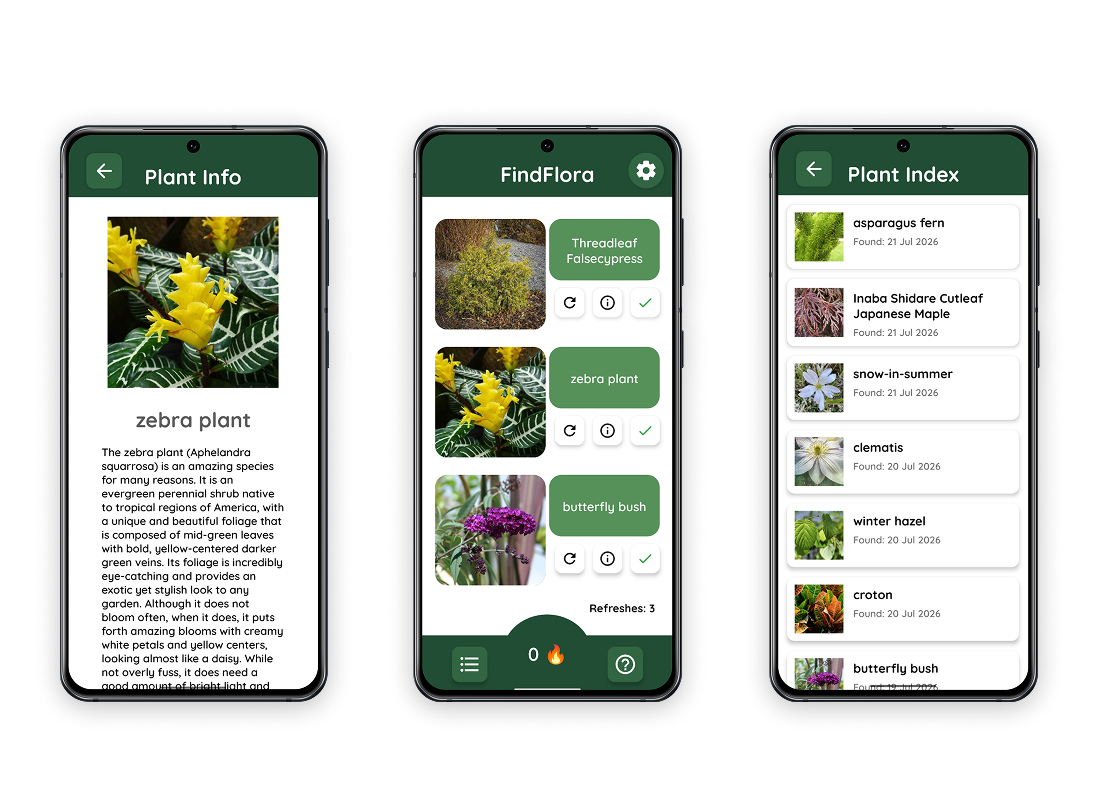
Context & Concept
Context: University Mobile Development Project (Fully Functional App)
Traditional digital plant encyclopedias are passive and text-heavy, failing to keep users engaged outdoors. FindFlora was designed to transform static education into an active, habit-forming daily scavenger hunt.
Borrowing the collection index model from Pokémon GO and the daily retention loops of games like Wordle, I mapped out an experience that rewards users for daily check-ins while educating them on local flora.
UX Engineering & Constraints
- Designing for Physical Context: Because the app is meant to be used outside, I designed a high-contrast theme paired with a highly legible sans-serif font.
- Preventing Dead Ends: The plant API used limits queries to 100 per day. To ensure users do not run into bugs, I built a local database cache to serve data seamlessly in the background without exhausting limits.
- Performance as UX: A lagging interface ruins immersion and causes drop-offs. By utilizing background threading for data fetches, I prevented the UI from freezing, keeping the user's experience snappy and responsive.
Privacy & Edge Cases
- Privacy-First Fallbacks: Location data optimizes the app, however, if a user denies permissions, the app falls back to a manual continent-selection flow rather than blocking access entirely.
- Defensive Design: To protect user progress during active outdoor use, explicit confirmation dialogs and context-aware notifications (Toasts) were added to high-risk actions to prevent accidental data loss.
- Retrospective: The API data was limited, so the app relies on general temperature zones rather than exact countries. To improve this, I would need to research and hardcode specific country hardiness data myself. Moving forward, my next major step would be conducting usability testing to observe how users navigate the experience.